
The IARC – International Agency for Research on Cancer / World Health Organization and the European Union have released the fifth edition of the European Code Against Cancer (ECAC5): a set of 14 recommendations based on solid scientific evidence to help reduce cancer risk.
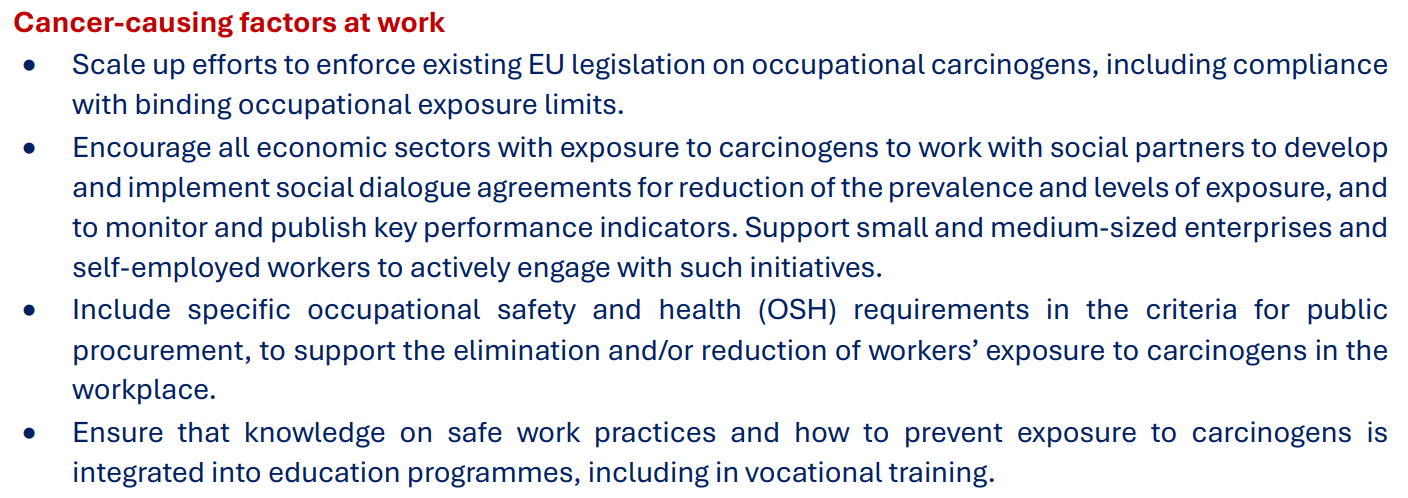
Among the various topics addressed, the Code also includes a specific section on cancer-causing factors at work, reminding us that protecting workers from exposure to carcinogens is an essential pillar of prevention. The document highlights the importance of:
• Strictly applying European regulations on exposure limits;
• Engaging companies, workers, and social partners in monitoring and reducing exposures;
• Integrating safety requirements into processes and public procurement;
• Ensuring continuous training on safe work practices.
These recommendations reinforce a key principle: prevention is built on reliable data, controlled processes, and an organizational culture that puts safety first. Investing in safer work environments means not only protecting people’s health, but also ensuring quality, operational continuity, and responsible innovation.
At Addax Biosciences, we work precisely in this direction: we develop technologies designed to minimize the exposure of healthcare professionals to potentially hazardous agents. Our #GAF fixative, developed for diagnostic and histopathology workflows, was created with this need in mind: offering professionals safer, more sustainable solutions aligned with international recommendations.
The message of ECAC5 is clear and can no longer be overlooked: protecting workers is not an operational detail, but a central element in the fight against cancer. And companies in the field have both the responsibility, and the opportunity, to contribute with concrete tools.
The Code does not speak only to citizens: it also addresses organizations and policy-makers, encouraging them to create structural conditions that truly enable prevention.
To learn more, you can consult the full fifth edition of the Code, which also covers topics such as nutrition, physical activity, screening, radon, pollution, and infection-related cancer risks.